
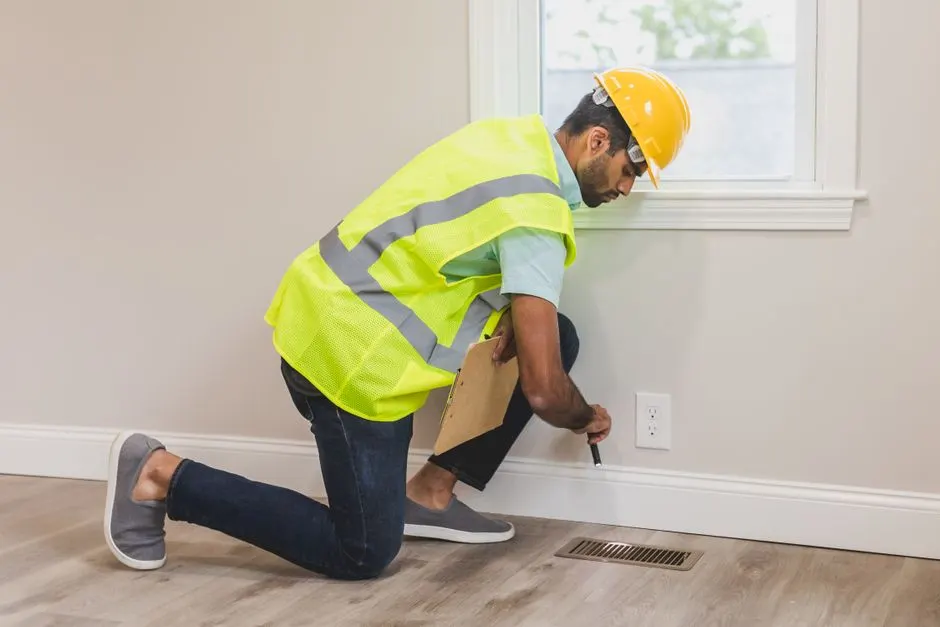
A mold inspection in Boise is a 1.5-to-3-hour on-site evaluation where a certified inspector interviews you about the history of the home, walks every accessible room and crawl space, takes moisture and humidity readings, and collects air or surface samples for lab analysis. You get a written report with lab results in 2 to 5 business days. That is the whole process in one breath. The rest of this article breaks down each step so you know exactly what to expect, what we look for in Treasure Valley homes, and what the report actually tells you.
The Short Answer: What a Mold Inspection Actually Is
A mold inspection in Boise is a non-invasive diagnostic service that determines whether mold is present, where the moisture source is coming from, and how far the problem has spread. It is not the same as remediation. We do not remove anything during an inspection. We find the problem, document it, and hand you a report you can act on.
Most homeowners call us after they smell something musty, see a dark stain on drywall, or get a note from a home inspector during a real estate transaction. Others call because a family member has been waking up congested every morning for a month. All three are good reasons to schedule a mold inspection Boise ID.
Boise Mold Testing handles the full inspection and testing side of the work. If you want to see everything we offer, our Mold Inspection and Testing Boise ID page covers the services, coverage area, and how to book.
Step 1: The Pre-Inspection Interview
The first 10 to 15 minutes of every inspection happen before we pull out a single tool. We ask you questions that shape the rest of the visit.
- When did you first notice the smell, stain, or symptom?
- Has the home had a roof leak, plumbing leak, or appliance overflow in the last 24 months?
- Do you run a humidifier in winter? How often?
- Has the crawl space ever flooded or held standing water?
- Is there a known history of mold in this house or in the unit above or below you?
Those answers tell us where to focus. A homeowner who mentions a slow dishwasher leak under the cabinet sends us straight to the kitchen. A homeowner who mentions a 2019 roof replacement sends us to the attic first. Boise homes built before 1980 often have original cast-iron drain lines that seep slowly for years before anyone notices. That history matters.
Step 2: The Exterior and Foundation Walkthrough
Mold inside a house almost always starts with water outside the house. We walk the perimeter and check the grading, downspouts, window wells, and foundation line. In Boise, the two most common exterior moisture drivers we see are negative grading (soil sloping toward the foundation instead of away) and downspouts that dump water within 2 feet of the wall.
We also check the crawl space access, the rim joist area, and any exterior penetrations for HVAC lines or hose bibs. If we see efflorescence - that white chalky mineral deposit on concrete - we know water has been moving through that wall repeatedly.
This step takes 15 to 25 minutes on a typical single-family home. On larger properties in North End Mold Inspection and Testing territory, where 1920s bungalows sit on tight lots with mature trees, it can run longer because there is more shade, more organic debris, and more original foundation work to inspect.
Step 3: The Interior Room-by-Room Inspection
This is the longest part of the visit. We work through the home systematically, starting at the top and moving down.
Attic
Roof leaks, bath fan venting, and insulation moisture are the three things we look for. If a bath fan dumps warm humid air into the attic instead of outside, you will see dark staining on the roof sheathing within one or two winters. We check the sheathing, rafters, and any HVAC equipment up there.
Living areas and bedrooms
We look at exterior walls, window frames, baseboards, and ceilings below bathrooms. Any discoloration gets a moisture reading. We also check behind furniture that sits tight against exterior walls, because that is where condensation mold shows up first in Boise winters.
Bathrooms and kitchen
Under-sink cabinets, toilet bases, shower surrounds, and the dishwasher area get close attention. A slow toilet flange leak can feed mold into the subfloor for a year before the floor feels soft. We also check the range hood and any under-cabinet moisture.
Crawl space and basement
We enter every accessible crawl space. In Boise, crawl space mold is usually tied to poor vapor barrier coverage, missing foundation vents, or a disconnected dryer vent. We check the joists, subfloor, insulation, and vapor barrier condition. If you want the deep version of this, see our page on crawl space mold inspection Boise ID.
Step 4: Moisture and Humidity Readings
Yes, mold inspectors use moisture meters in Boise Idaho - and they are the single most useful tool we carry. A pin-type meter reads moisture content in wood and drywall. A pinless meter scans larger areas without leaving holes. We also use a thermo-hygrometer to read relative humidity and temperature in each zone.
Here is what the numbers mean in practice:
- Wood moisture content below 16% - normal, no active growth expected.
- 16% to 20% - elevated, watch it. This is where mold starts.
- Above 20% - active moisture problem. Mold is likely already growing.
- Indoor relative humidity above 60% - condensation risk on cold surfaces.
Boise indoor humidity swings hard. Summer air is dry enough that most homes sit at 30% to 40% without help. Winter is the problem. Once you seal the house up and run a humidifier, indoor RH can climb past 55% in a bedroom with poor air circulation. We see this most in newer, tightly built homes where the envelope does not breathe.
If humidity is the driver, we recommend a dedicated humidity testing Boise ID assessment so you can see the daily curve, not just a single snapshot.
Step 5: Air and Surface Sampling
Sampling is how we confirm what the eyes and meters suggest. Not every inspection needs samples. If we find visible mold on a bathroom ceiling and the moisture source is obvious, we document it and skip the lab. If the source is unclear, if the smell is present but nothing is visible, or if this is a real estate transaction, we sample.
The two main sample types:
- Air samples - a calibrated pump pulls a known volume of air across a spore trap. We take one outdoor control sample and one or more indoor samples. The lab compares indoor spore counts to the outdoor baseline. Elevated indoor counts of a water-damage indicator like Stachybotrys or Chaetomium is a red flag.
- Surface samples - a tape lift or swab taken directly from a suspect stain. This tells you what is growing on that surface, not what is floating in the air.
Lab turnaround is typically 2 to 3 business days, sometimes same-day if you pay for rush. The report lists genus, spore count, and a comparison to the outdoor control.
How Long Does a Mold Inspection Take in Boise Idaho?
A standard mold inspection in Boise takes 1.5 to 3 hours on site. A small condo or single-story home with a slab foundation runs closer to 90 minutes. A two-story home with a crawl space, an attic, and a finished basement runs 2.5 to 3 hours. Add 30 to 45 minutes if we are sampling multiple rooms and taking a full set of air samples.
Lab results come back in 2 to 5 business days. The written report usually lands in your inbox within 24 hours of the lab results, so plan on a 3-to-6-day window from inspection to final report.
Typical 2026 pricing in the Boise area runs $300 to $600 for a standard inspection, and $150 to $250 more if you add air sampling. Crawl space or attic-only inspections are often less. Full post-remediation clearance testing is priced separately.
What Do Mold Inspectors Look For in Boise ID?
We are looking for three things, in this order: water, then mold, then the path between them.
- Water intrusion points - roof penetrations, window flashing, foundation cracks, plumbing supply and drain lines, appliance connections, and HVAC condensate lines.
- Moisture reservoirs - wet insulation, saturated subfloor, standing water in a crawl space, or a slow drip inside a wall cavity.
- Visible growth - discoloration on drywall, wood, or insulation. We note color, texture, and location.
- Musty odors - smell is data. If you smell it and we cannot see it, we sample.
- HVAC contamination - mold in the air handler, duct liner, or condensate pan spreads spores through the whole house every time the system runs.
We also check the things homeowners overlook: the back of the refrigerator, the cabinet under the kitchen sink, the closet behind the water heater, and the wall behind the washing machine. Those four spots account for a surprising share of the mold calls we run in Boise.
Common Mistakes Homeowners Make Before an Inspection
Most of the mistakes we see happen in the 24 hours before we arrive.
- Bleaching the visible mold. Bleach kills surface mold but leaves the moisture source untouched, and it destroys the sample. If you clean it, we cannot test it. Leave it alone.
- Running a dehumidifier for two days straight. That dries out the readings we need to confirm an active problem. Turn it off 12 hours before we arrive.
- Sealing off the crawl space access. We need to get in. If the hatch is screwed shut or blocked by stored boxes, clear it before the visit.
- Assuming the smell is the mold. Musty air can come from a dry source that is not actively growing. Sampling tells the difference.
- Skipping the report review. The report tells you which rooms tested high, which surfaces had growth, and what the moisture readings were. Read it before you call a remediation company.
When to Call a Professional
Call us if you smell musty air that does not go away after a week of ventilation, if you see discoloration on drywall or wood that keeps coming back after cleaning, if anyone in the house has new allergy or respiratory symptoms that improve when they leave, or if you are buying or selling a home and need documentation.
Boise Mold Testing handles the inspection and testing side of every job. We do not sell remediation, so the report you get is the report you get - no upsell. If remediation is needed, we tell you, and we can come back afterward for post-remediation verification Boise ID to confirm the work was done correctly.
Frequently Asked Questions
What happens during a mold inspection in Boise ID?
A certified inspector interviews you about the home's history, walks the exterior and every accessible interior space, takes moisture and humidity readings, and collects air or surface samples if needed. You receive a written report with lab results in 2 to 5 business days. On-site time is 1.5 to 3 hours.
How long does a mold inspection take in Boise Idaho?
Plan on 1.5 to 3 hours on site, depending on home size and whether there is a crawl space or basement. Add 30 to 45 minutes if we are collecting multiple air samples. Lab results take 2 to 5 business days, and the final report follows within 24 hours of those results.
Will the mold inspector move furniture in Boise ID?
We move small items like boxes, rugs, and lightweight furniture to check walls and floors behind them. We do not move large appliances, pianos, or heavy furniture. If you want a specific area checked behind something heavy, clear it before we arrive and we will inspect it thoroughly.
Do I need to be home during a mold inspection in Boise Idaho?
You do not have to be home, but the first 15 minutes of the interview are much more useful if you are. If you cannot be there, leave a note with the home's moisture history, any recent leaks, and a phone number where we can reach you. We will call with questions during the walkthrough.
Do mold inspectors use moisture meters in Boise Idaho?
Yes. Pin-type and pinless moisture meters are the core diagnostic tools on every inspection. We also use thermo-hygrometers to read relative humidity. Wood moisture content above 16% is where we start paying attention, and above 20% means active growth is likely.
Get Help with Mold Inspection and Testing in Boise
If you have smelled something musty, seen a stain that keeps coming back, or you are in the middle of a real estate transaction and need a documented inspection, call us. We will tell you what we find, what it means, and what to do next - no remediation sales pitch attached.
Call Boise Mold Testing at +1 (866) 896-8166 to schedule your inspection. Most appointments are available within 2 to 3 business days.