Logo
Get Estimate

Moisture inspection Boise ID that finds hidden water before mold does

Moisture assessment in Boise Idaho for homes, rentals, and commercial buildings


A moisture inspection Boise ID is the fastest way to catch a hidden leak before it turns into mold. We use moisture meters, thermal imaging cameras, and borescope cameras to trace water inside walls, under floors, and through crawl spaces. If you have seen a stain, smelled something musty, or had a recent leak, our moisture assessment in Boise Idaho tells you exactly where the water is and how far it has spread.

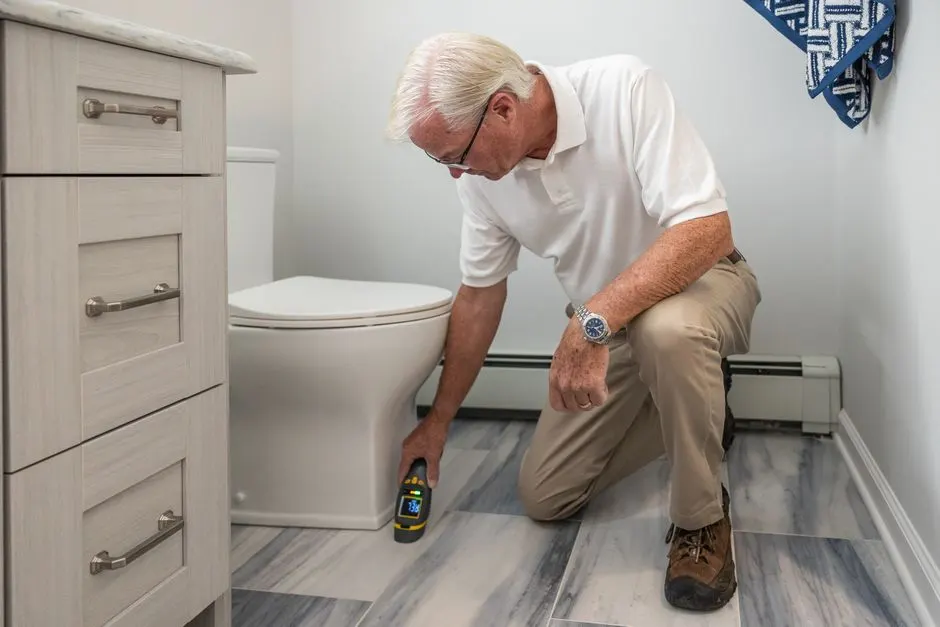
A senior man using a device to inspect a bathroom for maintenance or repair.
Licensed Licensed & Bonded
Fully Insured Insured & Bonded
24/7 Emergency Same-Day Response
Warranty Backed Workmanship Guaranteed in Boise

What is included in a moisture inspection

Every moisture inspection Boise ID visit includes the core services below. If you need additional testing, such as air sampling or mold testing, we can add it during the same visit. We tell you the price before we start, so you know exactly what you are paying for.

Visual moisture survey

We walk the property and check all common moisture areas: bathrooms, kitchen, laundry, water heater closet, crawl space, attic, and basement. We look for staining, warping, efflorescence, and musty odors. This step takes 15 to 20 minutes on a typical Boise home and often points us to the areas that need instrument testing.

Moisture meter readings

We take readings with a Protimeter moisture meter at every suspect location and baseline readings in dry areas. You get a numeric comparison that shows exactly how wet one area is compared to normal. Readings above 16 percent in wood framing or above 20 percent in drywall indicate a problem that needs attention.

Thermal imaging scan

A Flir thermal imaging camera shows temperature differences that reveal hidden moisture behind walls, under floors, and above ceilings. We scan every room and document any anomalies with photos. Thermal imaging finds moisture that a visual inspection would miss, especially behind finished surfaces.

Borescope cavity inspection

Where readings and thermal images point to a wet cavity, we slide a borescope camera through a small opening to see the back of the drywall, insulation, and framing. This confirms whether moisture has reached the structural materials and whether mold growth is present. No demolition required.

Written report with photos

You get a written report within 24 hours with moisture readings by location, thermal images, borescope photos, and a plain-language summary of what we found and what to do next. The report is formatted for homeowners, real estate agents, and insurance adjusters. It stands on its own as documentation.

Source identification

We do not just find moisture, we trace it to the source. Whether it is a plumbing leak, roof flashing failure, grading issue, or condensation problem, we identify the cause and document it precisely. That lets your plumber, roofer, or contractor fix the right thing the first time.

What a moisture inspection Boise ID actually covers


A moisture inspection Boise ID is a non-invasive evaluation that measures water content in building materials and traces where it came from. We check drywall, subfloor, framing, insulation, and concrete with a Protimeter moisture meter and an Extech hygrometer, then confirm what the meter finds with a Flir thermal imaging camera. If a wall reads wet, we slide a borescope camera behind the drywall to see the back side of the cavity without cutting a hole. You get readings, photos, and a clear answer about what is wet and why.

Boise homes deal with a specific moisture pattern. Winter snow sits against foundations for weeks, spring melt pushes water into crawl spaces, and summer irrigation lines soak the soil around older North End and Depot Bench homes. Add a roof leak after a windstorm or a supply line that drips behind a cabinet, and you have the conditions for hidden mold behind drywall. If you have been searching for a home moisture inspection near me Boise, we can usually get a technician out the same day you call.

How our moisture inspection process works

Every visit follows the same five steps, whether you are dealing with a post-leak emergency or a routine check before selling. Here is what you can expect from the moment you call.

01

Schedule

Call or book online — a real human picks up and confirms a 2-hour arrival window.

02

Diagnose

Licensed tech inspects on-site, then walks you through the cause and your options.

03

Fix

The job is completed to code and done right the first time — no shortcuts, no surprises.

04

Guarantee

Every job backed by a written workmanship warranty — and we stand behind it.

Tools and methods we use for moisture detection

Tools & Equipment

Protimeter moisture meter

Measures water content in wood, drywall, and concrete. We use it to get numeric readings at every suspect location and compare them to dry baseline areas. Readings above 16 percent in wood or 20 percent in drywall indicate a problem.

Flir thermal imaging camera

Shows temperature differences that reveal hidden moisture behind walls, under floors, and above ceilings. Thermal imaging finds moisture that a visual inspection would miss, especially behind finished surfaces. We document anomalies with photos.

Borescope camera

Slides through a small opening to show the back side of drywall, insulation, and framing inside a wall cavity. This confirms whether moisture has reached structural materials and whether mold growth is present. No demolition required.

Extech hygrometer

Measures relative humidity and temperature in the air. We use it to check whether indoor humidity is high enough to support mold growth, above 55 percent, and to evaluate whether ventilation or dehumidification is needed.

SKC air sampling pump

Draws air through a spore trap cassette to capture airborne mold spores. We use it when moisture inspection findings suggest mold may be present but we cannot see it. Samples go to an accredited lab for analysis.

Zefon Air-O-Cell spore trap cassette

Captures airborne spores for lab analysis. Paired with the SKC pump, it gives a snapshot of what is in the air during the inspection. Lab results identify species and concentrations, which guides next steps.

Dylos particle counter

Measures airborne particle counts in real time. We use it to get a baseline reading before and after air sampling, and to check whether HVAC systems are distributing particles through the home. It is a fast, non-invasive screening tool.

Methods & Standards

IICRC WRT moisture investigation protocol

We follow the IICRC Water Restoration Technician standard for tracing moisture through building assemblies. That means checking not just where water is visible, but where it likely traveled based on gravity, capillary action, and building materials. This protocol prevents us from missing moisture that has moved away from the visible source.

Thermal imaging plus meter confirmation

Thermal imaging shows us where to look, but we never rely on it alone. Every thermal anomaly is confirmed with a moisture meter reading. That two-step approach eliminates false positives from insulation gaps or air leaks and gives you readings you can trust. It is the standard we hold every technician to.

Borescope verification

When a wall cavity reads wet, we slide a borescope camera inside to see the actual condition of the drywall back, insulation, and framing. This confirms whether moisture has reached structural materials and whether mold growth is present. It turns a reading into a visual fact you can see in the report photos.

Air sampling for hidden mold

When moisture is present but mold is not visible, we deploy an SKC air sampling pump with a Zefon Air-O-Cell spore trap cassette. The sample goes to an accredited lab, and results come back in two to three business days with species identification and concentration. This tells you whether the moisture has already affected air quality.

Post-inspection source tracing

Finding moisture is only half the job. We trace it back to the source, whether that is a plumbing leak, roof flashing failure, grading issue, or condensation problem. We document the source precisely so your plumber, roofer, or contractor can fix the right thing the first time. No guesswork, no repeat visits.

When to schedule a moisture inspection

01

You just discovered a leak under the sink or behind the washing machine.

What we do: We come out the same day if you call before noon. We measure how far the water traveled, check the cabinets and flooring for elevated readings, and use thermal imaging to see behind the wall. If the leak has been slow and long-term, we check for hidden mold behind drywall.

→ You get a documented moisture map and a clear answer about whether drying or mold testing is needed. Most customers know within two hours whether they are dealing with a simple dry-out or a bigger issue.

02

You are buying or selling a home in Boise and want to know about moisture issues before closing.

What we do: We perform a pre-sale or pre-purchase moisture assessment in Boise Idaho that covers the whole house, including crawl space and attic. We document readings, thermal images, and any signs of past or present moisture. The report is written for real estate transactions and stands up to scrutiny.

→ Buyers know what they are getting. Sellers can address issues before they become negotiation points. Agents get a clear document that supports the transaction. We have done hundreds of these for Boise-area real estate deals.

03

You had a roof leak or storm damage and want to know if moisture got into the walls.

What we do: We trace moisture from the attic down through the wall cavities using thermal imaging and moisture meters. If the roof leak was recent, we measure how far water traveled and whether insulation is wet. We document everything for your insurance claim.

→ You get a report that shows the exact extent of moisture intrusion. Your roofer knows what to fix, your insurance adjuster has documentation, and you know whether mold testing is needed. Most post-storm moisture inspections take two to three hours.

04

Your home has a musty smell and you cannot find the source.

What we do: We use thermal imaging and moisture meters to scan every room, then borescope any cavity that reads wet. We check the crawl space, attic, and HVAC system for hidden moisture. If air quality testing is needed, we deploy an SKC air sampling pump with a Zefon Air-O-Cell spore trap cassette.

→ You get the source identified and documented. If mold is present, you know where and how much. If it is a simple ventilation issue, you get a fix that costs far less than remediation. No guesswork.

05

You are doing a renovation and want to check for hidden moisture before closing up walls.

What we do: We inspect the exposed framing, subfloor, and sheathing with a moisture meter and thermal camera. If readings are elevated, we trace the source before the wall goes back together. This is the cheapest time to fix a moisture problem because the wall is already open.

→ You avoid closing mold behind new drywall. The renovation proceeds with dry materials and a documented baseline. If moisture is present, you fix it now instead of paying for demolition later.

How moisture inspection works in Boise

Boise's climate creates a specific set of moisture challenges. Winter brings snow that sits against foundations for weeks, and spring melt pushes water into crawl spaces and basements. Summer irrigation lines soak the soil around older homes in the North End and Depot Bench, where clay soil holds water against foundation walls. Fall rain and windstorms drive water through roof flashing and window seals. We see the results of all of these patterns in our moisture inspection Boise ID work. Older homes in the North End and East End often have original galvanized plumbing that develops pinhole leaks inside walls. Mid-century ranches on the Boise Bench frequently have crawl spaces with failing vapor barriers and poor drainage. Newer construction in Harris Ranch and Southeast Boise sometimes has grading that directs water toward the foundation instead of away from it. If you have been searching for a moisture assessment in Boise Idaho, we know the specific areas to check based on your neighborhood and home age. We also serve Ada County ZIP codes 83702, 83703, 83704, 83705, 83706, and 83709.

Neighborhoods We Serve

  • North End

    Older homes with original plumbing and clay soil that holds water against foundations. We check crawl spaces and wall cavities carefully after spring melt.

  • Boise Bench

    Mid-century ranches with crawl spaces that often have failing vapor barriers. We see elevated moisture readings in joists and insulation after wet winters.

  • Harris Ranch

    Newer construction where grading sometimes directs water toward the foundation. We check for moisture intrusion at the base of walls and in basements.

  • Depot Bench

    A mix of older and newer homes with irrigation lines that can leak undetected. We trace moisture from landscaping and supply lines.

  • Highlands

    Homes on sloped lots where runoff can enter crawl spaces and basements. We check foundation drains and grading after heavy rain.

Local Conditions We Plan For

  • Spring snowmelt saturating crawl spaces

    Water enters crawl spaces through foundation walls and soil, raising moisture readings in joists and insulation. We see this every March and April in Boise. Our inspection documents the extent and identifies whether drainage or a vapor barrier fix is needed.

  • Summer irrigation against foundations

    Sprinkler systems running near foundation walls soak the soil and push water against the home. In older North End and Depot Bench neighborhoods, this can lead to hidden moisture in basements and crawl spaces. We check these areas carefully during summer inspections.

  • Winter roof leaks from ice dams

    Ice dams form when snow melts and refreezes at the roof edge, forcing water under shingles. That water shows up in attic insulation and ceiling drywall. We trace it with thermal imaging and moisture meters to find the exact entry point.

  • Wind-driven rain through window seals

    Boise windstorms drive rain sideways into window frames and exterior walls. If the flashing or seal is compromised, water enters the wall cavity. We check window walls after storms and document any elevated readings.

Hidden supply line leak in North End bungalow

Before

A homeowner in the North End noticed a musty smell in the hallway but could not find any visible water. The bathroom wall felt dry to the touch. They had been living with the smell for two months and were worried about mold but did not want to cut into the wall without knowing what was behind it.

After

Our thermal imaging camera showed a cold spot behind the bathroom wall. A moisture meter read 24 percent in the drywall, well above the 20 percent threshold. A borescope camera confirmed a slow supply line leak dripping inside the cavity. We documented the source, the homeowner called a plumber, and the leak was fixed the next day. No mold growth was found.

Maintenance: The homeowner now checks under the sink monthly and watches for any new musty odors. We recommend a follow-up moisture reading after any plumbing repair to confirm the wall has dried to normal levels.

Before

After a wet spring, a Boise Bench homeowner noticed a musty smell coming from the floor vents. The crawl space had standing water in one corner, and the insulation was sagging. They were concerned about mold on the joists but could not see any growth from the access hatch.

After

We measured moisture readings of 22 to 28 percent in the joists and subfloor, well above the 16 percent threshold for wood. Thermal imaging showed the water was entering through a foundation crack on the north wall. We documented the source and recommended a foundation seal and a new vapor barrier. The homeowner had the work done, and follow-up readings three weeks later were back to 12 percent.

Maintenance: We recommended checking the crawl space every spring after snowmelt and keeping gutters clear to direct water away from the foundation. A dehumidifier desiccant in the crawl space can help maintain dry conditions during wet months.

Before

A windstorm drove rain under the roof flashing of a Harris Ranch home. The homeowner noticed a small water stain on the ceiling two days later. They were not sure if it was a one-time event or an active leak, and they wanted documentation for an insurance claim.

After

We found moisture readings of 18 percent in the ceiling drywall and 22 percent in the attic insulation directly above the stain. Thermal imaging showed the moisture path from the roof flashing down to the ceiling. We documented everything with photos and readings. The homeowner filed a claim with our report, and the roofer fixed the flashing the same week.

Maintenance: We recommended a follow-up moisture reading after the repair to confirm the attic dried out. The homeowner now checks the attic after every major windstorm and watches for new ceiling stains.

Moisture problems we solve for Boise homeowners

These are the moisture issues we see most often in Boise homes. If any of these sound familiar, a moisture inspection Boise ID is the fastest way to get answers and a plan.

Problem

Musty smell with no visible water

A musty odor usually means mold is growing somewhere you cannot see. By the time you smell it, the colony has likely been active for weeks. Ignoring it lets mold spread through wall cavities and into living spaces.

Our Fix

We use thermal imaging and moisture meters to find the hidden moisture source behind walls, under floors, or in the crawl space. A borescope camera confirms what is happening inside the cavity. You get a documented source and a clear next step, usually within two to three hours of arrival.

Problem

Ceiling stain that keeps coming back

A recurring ceiling stain means the water source was never fixed. Paint covers it for a few months, then the stain returns. Each cycle adds more moisture to the drywall and framing, increasing the chance of mold and structural damage.

Our Fix

We trace the stain back to its source, whether that is a roof leak, a plumbing line in the attic, or an HVAC condensate issue. Thermal imaging shows the moisture path, and moisture meter readings tell you how far it has spread. You get the source documented so the repair is permanent.

Problem

Crawl space dampness after spring melt

Boise's spring snowmelt pushes water into crawl spaces through foundation walls and soil. Damp crawl spaces feed mold on joists and insulation, and the mold spores can migrate into living areas through the stack effect. Long-term dampness also rots framing.

Our Fix

Our crawl space moisture inspection measures water content in joists, insulation, and the vapor barrier. We identify whether the source is groundwater, a plumbing leak, or outdoor grading. You get a report showing exactly where the moisture is and what needs to change to dry it out.

Problem

Bathroom mold that keeps returning

Mold that comes back after cleaning means the moisture source is still active. Poor ventilation, failed caulk, or a slow drain leak keeps the wall cavity wet. Repeated cleaning without fixing the source is a cycle that never ends.

Our Fix

We check behind the shower, under the sink, and around the toilet with a moisture meter and borescope camera. If the wall cavity is wet, we document the source. If it is a ventilation issue, we measure humidity with an Extech hygrometer and recommend the right fix, whether that is a fan upgrade or a dehumidifier.

Problem

Basement dampness after heavy rain

Water entering a basement after rain means the foundation drainage or grading is failing. Damp basements grow mold on stored items, framing, and drywall. The moisture also raises indoor humidity, which affects the whole house.

Our Fix

We measure moisture in basement walls, floors, and framing, then trace the water entry point. Thermal imaging shows where water is migrating behind finished walls. You get a report that identifies whether the fix is grading, a sump pump, or foundation sealing, so you can get the right contractor on it.

Why Boise homeowners book a moisture assessment

Why Boise homeowners book a moisture assessment

Water damage gets more expensive every week it sits. These are the four outcomes our customers care about most when they schedule a moisture assessment Boise Idaho.

  • Catch mold before it spreads

    Mold needs 24 to 48 hours of sustained moisture to colonize drywall paper and framing. A moisture detection Boise ID visit finds that window while it is still open. We have walked into homes where a single slow leak behind a shower valve had been feeding black mold (Stachybotrys) for months. Catching it at 18 percent moisture content instead of 30 percent changes the entire repair scope.

  • Stop guessing about that stain

    A brown ring on the ceiling or a bubbling baseboard tells you water is moving, not where it started. Our moisture meter inspection Boise Idaho traces the source instead of the symptom. We have traced ceiling stains back to a failed wax ring two rooms away and basement dampness back to a downspout discharging six inches from the foundation. You get the source, not a guess.

  • Protect your insurance claim

    Insurance adjusters want documentation. Our reports include moisture readings by location, thermal images, and photo evidence with timestamps. When you file a water damage claim, that paperwork shows the damage was sudden and not a maintenance issue you ignored. It is the difference between a covered claim and a denied one.

  • Know before you buy or sell

    A pre-sale moisture assessment in Boise Idaho gives buyers and sellers the same set of facts. We have inspected homes in Harris Ranch and the Highlands where a fresh coat of paint hid active moisture in a bathroom wall. Finding it before closing saves a deal from falling apart or a buyer from inheriting a mold problem they did not price in.

Local experience you can put to work

Our technicians hold IICRC WRT (Water Restoration Technician) and IICRC AMRT (Applied Microbial Remediation Technician) certifications, plus ACAC CMI and CMR credentials. That training covers how water moves through building assemblies, how fast different materials absorb it, and how to tell the difference between a surface dampness issue and a structural moisture problem. We have inspected crawl spaces, attics, basements, and wall cavities across Ada County, and we know the moisture patterns that show up in Boise's older neighborhoods versus newer construction. We also carry EPA Lead-Safe and OSHA 10 training, which matters when we are working in pre-1978 homes.

  • IICRC WRT and AMRT certified technicians on every moisture inspection call
  • ACAC CMI and CMR credentials for mold and moisture assessment work
  • EPA Lead-Safe certified for pre-1978 homes common in North End and Depot Bench
  • OSHA 10 trained for safe crawl space and attic access
  • NACHI certified inspector standards applied to every property evaluation
Get Started Today
Local experience you can put to work

Moisture inspection questions Boise homeowners ask

Real answers to the questions we hear most often from local homeowners and property managers.

What does a moisture inspection include in Boise ID?
A moisture inspection in Boise ID includes a visual walkthrough, moisture meter readings at suspect locations, thermal imaging of walls and ceilings, and borescope inspection of any cavity that reads wet. We check bathrooms, kitchens, crawl spaces, attics, basements, and around water heaters and HVAC equipment. You get a written report with readings, photos, and a source assessment within 24 hours. Most inspections take two to three hours on a typical Boise home.
How do you detect moisture in walls in Boise Idaho?
We use a Protimeter moisture meter to measure water content at the wall surface, then confirm with a Flir thermal imaging camera that shows temperature differences caused by hidden moisture. If both instruments point to a wet cavity, we slide a borescope camera through a small opening to see the back of the drywall and the framing. This lets us confirm moisture without cutting large holes. A typical wall inspection takes 20 to 30 minutes per suspect area.
How much does moisture assessment cost in Boise ID?
Most moisture assessment calls in Boise ID run $180 to $450 depending on square footage, how many areas you want checked, and whether crawl space or attic access is involved. A single-room check for a known leak is at the lower end. A full-home assessment with thermal imaging and a written report is at the upper end. We quote the price before we schedule, so there are no surprises when the report arrives.
Can moisture inspection prevent mold in Boise Idaho?
Yes. Mold needs moisture to grow, and a moisture inspection Boise ID finds water before mold has time to colonize. If we find elevated readings, you can fix the source and dry the area within the 24 to 48 hour window before mold establishes. We have had customers catch a slow supply line leak at 16 percent moisture content, fix it the same week, and avoid any mold growth. That is the whole point of the service.

Other services that pair with moisture inspection

Mold Inspection

If your moisture inspection Boise ID turns up elevated readings, a mold inspection is the logical next step. We check the same areas for visible growth, musty odors, and conditions that support mold, then document what we find. Most customers bundle both services in a single visit to save on the trip charge.

View Mold Inspection

Mold Testing

When moisture is present but you cannot see mold, mold testing confirms whether spores are in the air. We use an SKC air sampling pump with a Zefon Air-O-Cell spore trap cassette and send samples to an accredited lab. Results come back in two to three business days with species identification.

View Mold Testing

Air Quality Testing

Air quality testing measures airborne particles, including mold spores, using a Dylos particle counter and air sampling pump. If your moisture assessment Boise Idaho shows hidden dampness, air testing tells you whether that moisture has already affected the air your family breathes. It is a fast, non-invasive add-on.

View Air Quality Testing

Black Mold Inspection

Black mold (Stachybotrys) needs sustained moisture to grow, which is exactly what a moisture inspection Boise ID is designed to find. If we locate black mold during an inspection, we document the extent, identify the moisture source, and recommend a remediation scope. We do not remediate, so our findings are unbiased.

View Black Mold Inspection

Toxic Mold Testing

Toxic mold testing looks for species that produce mycotoxins, including certain Stachybotrys and Aspergillus strains. If your moisture inspection Boise ID finds long-term dampness in a wall or crawl space, toxic mold testing tells you whether mycotoxin-producing species are present. Lab results guide your next steps.

View Toxic Mold Testing

Mold Remediation

If moisture inspection Boise ID confirms active mold growth, remediation removes it safely. We do not perform remediation, but we can refer you to licensed contractors and then verify their work with post-remediation verification. That separation keeps our inspection findings independent and trustworthy.

View Mold Remediation

Schedule your moisture inspection Boise ID today

If you have seen a stain, smelled something musty, or had a recent leak, do not wait. Water damage gets worse every day. Call us at +1 (866) 896-8166 and we will schedule your moisture inspection Boise ID, often the same day. Upfront pricing, written report within 24 hours, and no pressure to buy anything you do not need.

Call Now Book Inspection

Contact Boise Mold Testing

Ready to schedule an inspection or have questions about mold testing? Call us at +1 866-896-8166 or email info@boisemoldtesting.com. We answer calls 24/7 for emergencies and schedule same-day appointments whenever possible. Our team serves all of Boise and Ada County, including ZIP codes 83702, 83703, 83704, 83705, 83706, and 83709.

Or call us right now at +18668968166 — we answer.

Boise Mold Testing


  • Phone

    +18668968166
  • Address

    Boise, Idaho

  • Hours

    Mon–Fri: 7AM – 7PM
    Sat: 8AM – 4PM
    Sun: Emergency Only
    24/7 Emergency Available

Call +18668968166 Get Quote
Call Quote